


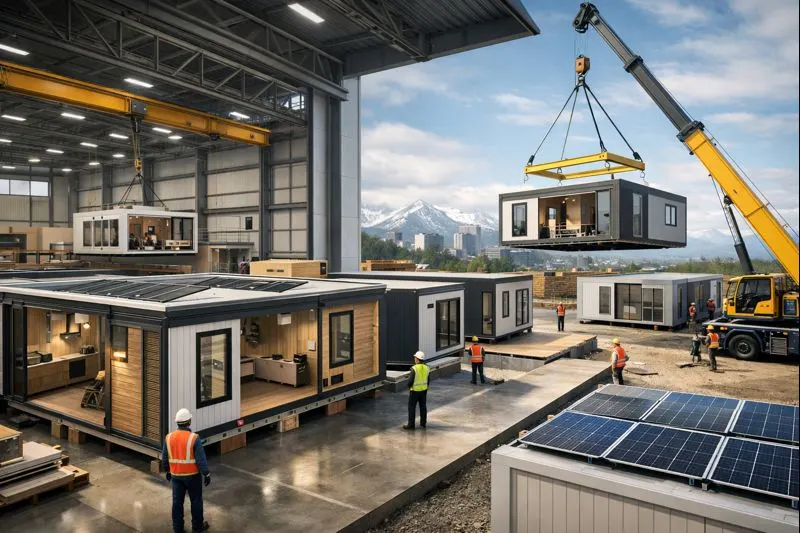
As 2025 comes to a close, some key trends continue to shape the construction landscape: value for money, quality over quantity, and precision-built structures designed to exacting standards. At Northgate Industries, we’ve helped bring these trends to life with every project, proving that smart building solutions deliver results.
In this blog, we’ll explore several key trends that highlight how modular construction is reshaping the industry and why so many organizations are rethinking the way they build. Let’s dive in.
1. Smart Materials Meet Smarter Construction
Smart modular construction means designing spaces that are ready for the future. By integrating smart and adaptive materials early in the build, you’re not just enhancing the user experience, you’re also protecting your long-term budget.
With the right systems in place, you can easily monitor and optimize energy consumption including HVAC, lighting, security, and water management. These technologies boost operational efficiency and create healthier, more responsive environments that support both remote and in-office work.
2. Sustainable By Design
Recycled and reclaimed materials are rapidly becoming the norm in sustainable modular construction. By building with these resources from the start, modular projects use fewer raw materials, generate far less waste, and naturally support circular practices where components can be reused or refreshed for multiple lifecycles.
This approach boosts sustainability and cuts costs and reducing reliance on new materials while making smarter use of what’s already available.
3.Faster Builds & Better Results
Modular construction can be completed 30–50% faster than traditional builds, thanks to the efficiency of factory production. With no weather delays, labour shortages, or unpredictable schedules, modular projects move smoothly from one stage to the next — consistent, streamlined, and fast.
That speed matters. As Canada’s need for clinics, long-term care homes, classrooms, offices, remote-work spaces, and housing grows, modular construction is stepping up — innovating to deliver high-quality spaces at the pace communities need.
4. Minimal Disruption & Maximum Impact
A major advantage of modular construction is that on-site work happens at the same time as off-site building. While modules are assembled in the factory, crews can finish foundations, utilities, and grading — without delays or trade bottlenecks. With no stored materials or half-built structures in the way, sites stay cleaner, safer, and easier to manage.
And because modules arrive nearly complete — finishes, mechanicals, and details included — they can be craned into place and made weather-tight in days, not months. The result is faster, cleaner, and far less disruptive construction for neighbours and communities — a smarter standard that more projects are beginning to follow.
5. Adapt On Demand
Gone are the days when buildings were designed for a single, fixed purpose. Today’s needs demand adaptable, multi-purpose spaces. Modular buildings offer built-in flexibility, allowing them to be easily modified, expanded, retrofitted, or even relocated as needs evolve. This adaptability makes modular design a future-proof solution for organizations looking to grow, reconfigure, or repurpose their spaces without starting from scratch.
Modular construction is proving successful across a wide range of industries. Medical facilities are being delivered with the same quality and functionality as traditional clinics, and in a fraction of the time. Hotels and hospitality developments are achieving faster openings with faster returns on investment. Housing projects, especially those supporting vulnerable populations, are being completed up to 30% faster than traditional builds, helping people access stable homes sooner. From scalability to speed to social impact, modular construction continues to redefine what modern building can achieve.
6. Flexible Financing For Flexible Buildings
Modular buildings are a game-changer for industries experiencing rapid growth. They combine high-quality craftsmanship with speed of construction, allowing organizations to meet urgent demands without compromising on standards. Traditional builds can be costly and unpredictable, with expenses and timelines affected by material costs, labor shortages, delivery delays, and weather. Modular construction offers a reliable, efficient alternative that keeps projects on track and on budget.
Flexibility is another key advantage. Modular buildings can be purchased new, repurposed, relocated, or modified for future projects. Used modular units can even be purchased and reused, extending their lifecycle and maximizing value. For short-term needs, modular buildings are also available to lease, reducing pressure on companies so they can focus on what matters most: project success. Faster, flexible, and financially smart, modular construction is helping businesses scale efficiently and sustainably.
Final Thoughts
Modular construction is redefining the future of building by offering smarter, faster, and more sustainable solutions. With precision engineering, adaptable design, and long-term value, modular buildings are transforming how industries approach space and structure.
Stay connected with Northgate Industries on LinkedIn for insights, sustainability trends, and the latest innovations in modular building solutions.