


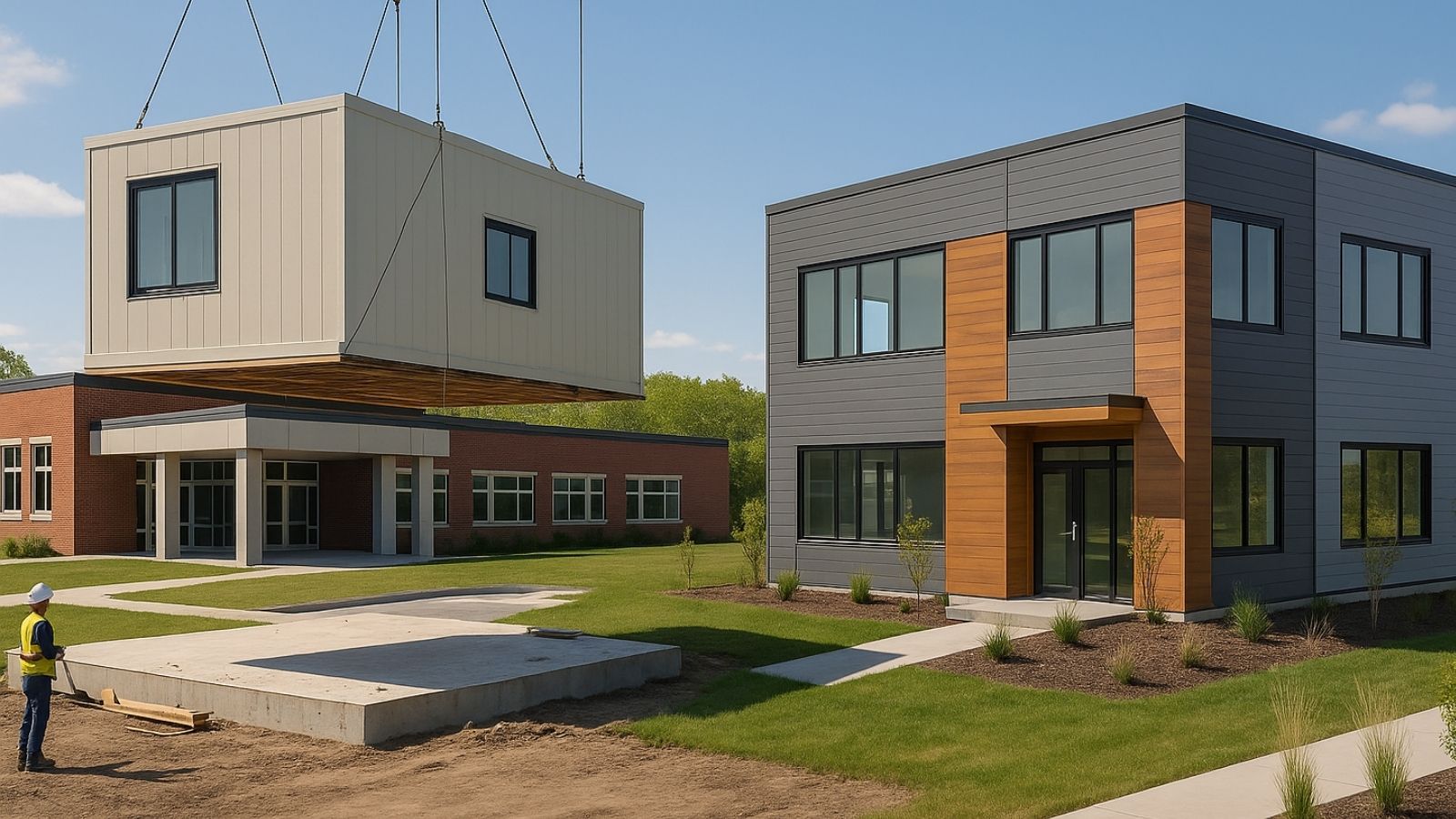
Simple temporary structures that many people remember are a thing of the past. Using today’s technology, design innovations, and eco-friendly materials, modular construction is a rising market sector in the building industry.
Northgate Industries is here to set the record straight. Let’s debunk 5 common myths about modular buildings.
1. Modular Buildings Are Second Rate
Each modular building is produced in a controlled factory environment using precision engineering and high-quality materials. Being built to withstand transportation and installation, modular structures typically offer greater strength and durability when compared to traditional on-site builds.
Reality: Modular buildings often exceed conventional quality.
2. Modular Buildings Are Only for Temporary Use
Modular buildings are ideal for permanent structures. They are designed for long-term use and can last for decades with proper maintenance. Options such as relocation, repurpose, or redesign allow flexibility for future projects.
Reality: Modular buildings deliver an economical solution for both temporary and permanent buildings.
3. Modular Buildings Are Cookie Cutter
Boxy and plain were once words used to describe modular buildings. Gone are those days – modern modular buildings are redefining design.
Northgate Industries offers a variety of layouts, finishes, and exterior styles that reflect an architect’s, builder’s, or company’s brand or project vision. Modular buildings can take any form — sleek offices, efficient multi-use spaces, welcoming homes, or clean medical clinics — but one thing they’re not is boring.
Reality: Modular buildings can be tailored to fit any vision.
4. Modular Construction Is Wasteful
Modular construction delivers precision and quality by building every component in a controlled factory. At our factory, we reduce material waste and increase energy efficiency — because we believe in measuring twice and cutting once.
At the heart of our approach is the belief that modular buildings can be relocated, reused, or repurposed to fit future needs — reducing raw material use and environmental impact.
Reality: Modular construction is one of the most eco-friendly building methods.
5. Modular Projects Are Complicated
Construction can be complex and overwhelming. But building doesn’t have to be stressful. Modular buildings streamline the process — built off-site while site preparation takes place — for faster completion and fewer surprises.
Reality: Modular construction is a smoother, more predictable way to build.
Final Thoughts
Modular construction represents a smarter, faster, and more sustainable way to build. With precision engineering, flexibility in design, and long-term value, modular buildings are transforming how industries think about space and structure.
Follow Northgate Industries on LinkedIn for more insights, sustainability trends, and updates on innovative modular building solutions.